Your AI agent rediscovers your codebase every conversation. Not anymore.
Code Confluence generates deterministic context—so your agents start every chat aligned with how your system actually works.
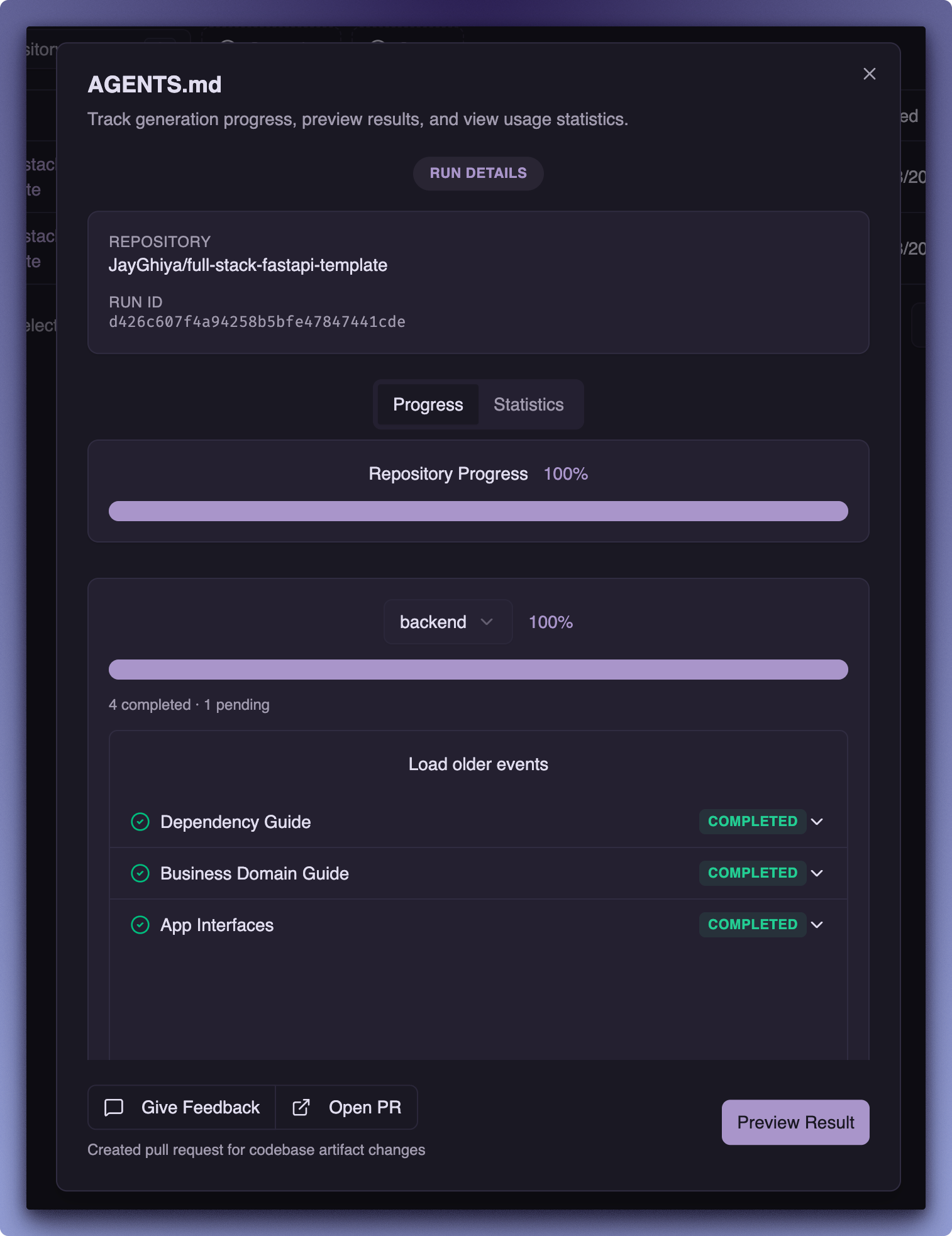
What's included
Code Confluence ships with integrations, model flexibility, and pull-request intelligence out of the box.
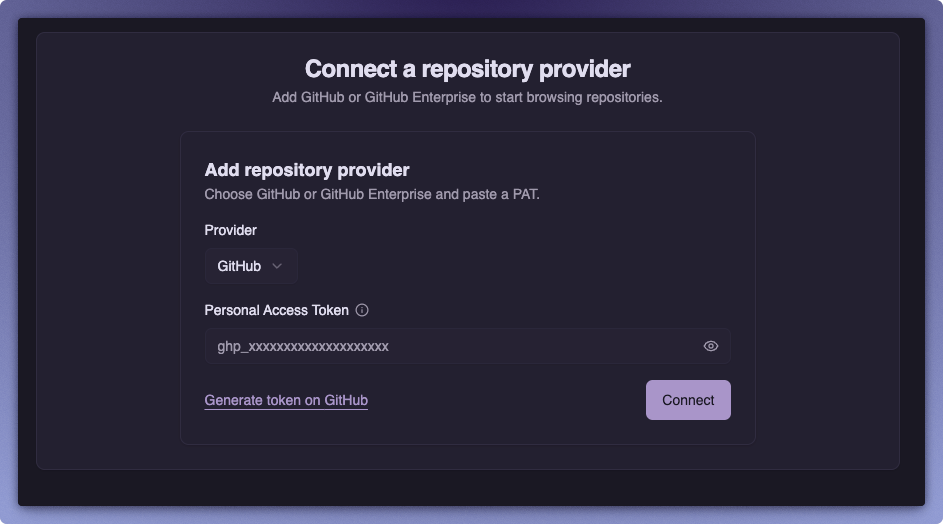
GitHub & GitHub Enterprise
First-class integration with GitHub and GitHub Enterprise, with more platform integrations on the way.
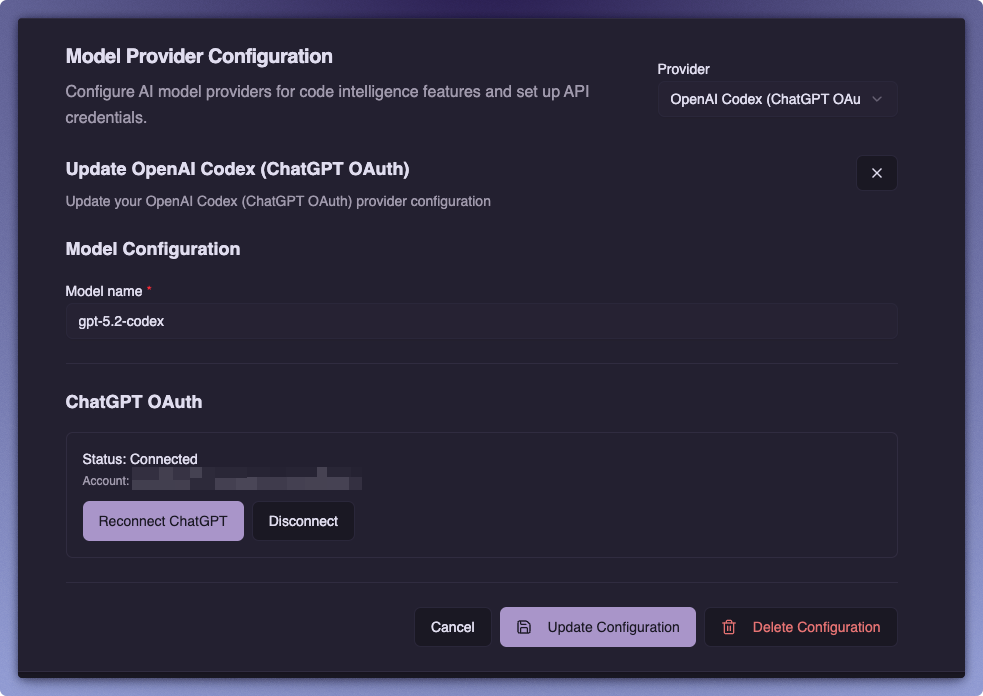
All Model Providers
Works with every major model provider—including ChatGPT subscriptions—so you use the AI you already pay for.
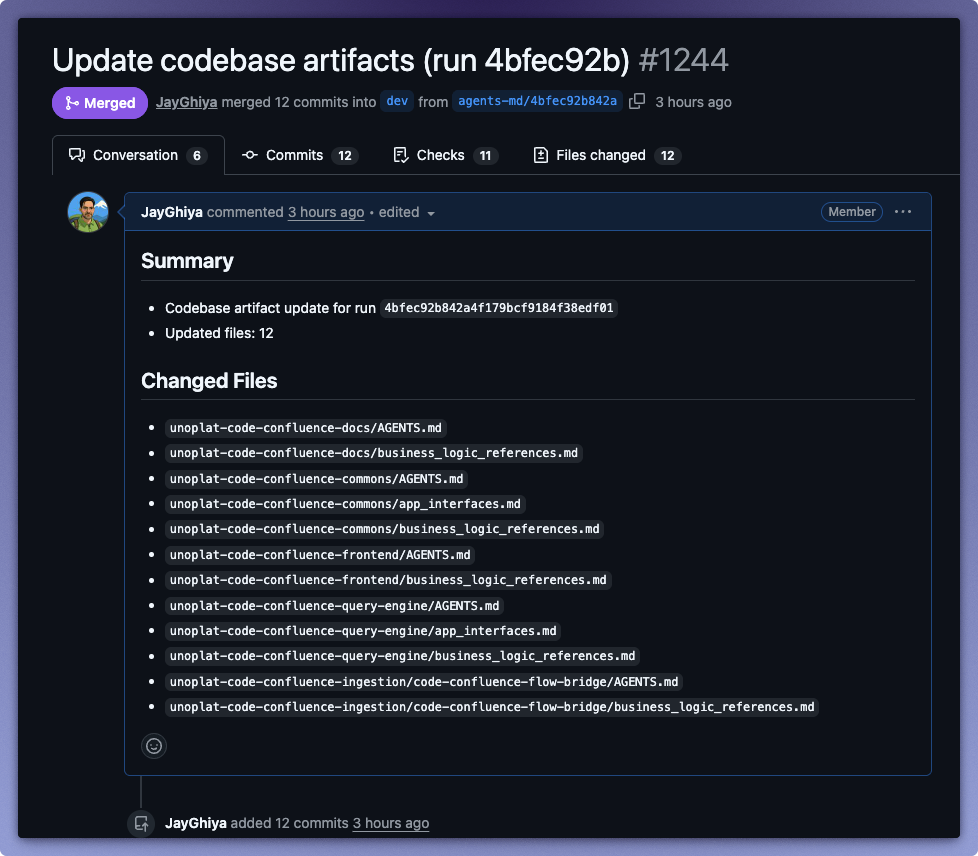
GitHub PR Support
Generated AGENTS.md file on demand to keep the architectural and business context in sync with your codebase as it evolves.
Four deterministic ingredients for every AI conversation
Code Confluence auto-generates a structured AGENTS.md from your codebase — architectural context, development workflows, domain models, and dependency tracking — giving your agentic AI precise code context to mitigate hallucination and accelerate planning.
Development Workflow
Every command, verified and cited
Six pipeline stages — install, build, dev, test, lint, and type-check — each extracted with confidence scores and config-file citations. Your agent runs the right command because it read the right config.
Dependency Guide
Purpose and usage from the source
Every dependency documented with its official purpose and core usage patterns — distilled from the library's own docs, so your agent never hallucinates an API.
Business Domain
Models mapped to meaning
App models and database schemas cataloged with their business responsibilities. File paths tied to domain concepts so your agent understands what the code represents, not just what it does.
App Interfaces
Interface Intelligence for every construct
HTTP, gRPC, WebSocket, webhooks, MQTT inbound. SQL, NoSQL, graph, vector databases, caches, queues outbound. Every interface mapped to file paths and match patterns via an open, community-extensible spec — for both frontend and backend.
Precise context. Reliable answers. Faster agents.
Real benchmarks using OpenCode + GPT-5.3 Codex — same prompts, same repo, with and without Code Confluence context. Less hallucination, faster responses, smarter agentic planning.
“What does this project do?”
less context sent to the model
faster response
Onboarding Users/Agents
“How do I run locally?”
less context sent to the model
faster response
Getting Started with Development Environment
“Observability, logging, DB deps?”
less context sent to the model
faster response
Understanding Project Dependencies
Every layer open. Every output yours.
Transparent Development, Public Roadmap, No vendor lock-in.
Your infrastructure, your data. Self-hosted auth, org-hosted GitHub app, and scheduled context updates on every release.
Auto-recovering traditional and agentic workflows — resilient by default, not by luck.
Full operation audit trail with detailed context so you can trace performance and provide feedback at ease.
Your agents deserve better context.
Install Code Confluence, point it at your repo, and give every AI conversation the architectural context it needs to get it right the first time.